|
|
||||||||||||||
A Leap of Faith |
||||||||||||||
|
This month, we get ready for warmer days and we set out along Washington’s hidden paths — into unexpected gardens.
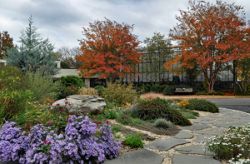
Washington’s Secret GardensWashington is known for its monuments, but those who live here know that the city is also renowned for its gardens. Beyond the Mall and the cherry blossoms, there are quiet paths, hidden places, and unexpected views where one can wander, away from the crowds. The Bishop’s Garden – Washington National Cathedral3101 Wisconsin Ave. NW, Washington, DC 20016 Designed in the early 20th century to complement the Washington National Cathedral, the Bishop’s Garden draws inspiration from medieval European cloisters. With its stone paths, herbs, and roses reminiscent of 12th-century plantings, it was conceived as a living extension of the Cathedral’s Gothic architecture. Kenilworth Park & Aquatic Gardens
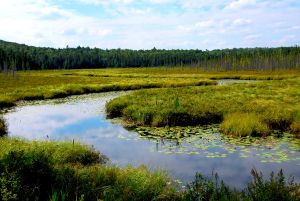
Originally a private water-lily garden cultivated in the late 1800s by Civil War veteran Walter Shaw, Kenilworth was later acquired by the federal government and is now managed by the National Park Service. It remains the only national park site devoted to aquatic plants. The wetlands are also a haven for birdlife. With the Merlin Bird ID app, you can even identify their songs as you go along. Dumbarton Oaks ParkR St. NW & 32nd St. NW (Lovers’ Lane entrance), Washington, DC 20007 Part of the early 20th-century estate of Mildred and Robert Woods Bliss, the parkland below the formal gardens was shaped by renowned landscape architect Beatrix Farrand. Designed to feel natural rather than formal, its stream, stone bridges, and woodland paths create a romantic counterpoint to the structured terraces above. The Spanish Steps & Kalorama RavineS St. NW & 22nd St. NW, Washington, DC 20008 Yes, there are “Spanish Steps” in Washington. Completed in 1911 and inspired by Rome’s celebrated staircase, Washington’s Spanish Steps were funded by neighborhood residents to link Kalorama to the city. More discreet than dramatic, they lead to Kalorama Park and the small wooded ravine nearby. Franciscan Monastery of the Holy Land1400 Quincy St. NE, Washington, DC 20017 Few places in DC feel as contemplative. Founded in 1897 by Franciscan friars, the monastery was created as a stateside pilgrimage site with replicas of Holy Land shrines. Its surrounding gardens were designed to echo that spiritual journey in landscape form. Across the BridgesGreen Spring Gardens
Just outside the city, less known than the Arboretum, it offers themed gardens and woodland paths. Once part of an 18th-century plantation, Green Spring evolved in the 20th century into a public horticultural garden blending historic landscape with demonstration gardens focused on native plants and sustainable design. Meadowlark Botanical Gardens9750 Meadowlark Gardens Ct., Vienna, VA 22182 Opened in 1995 and operated by NOVA Parks, Meadowlark spans nearly 100 acres. Designed to highlight ornamental and native plant collections, it is also home to the Korean Bell Garden, dedicated in 2011 as a symbol of peace and cultural friendship. River Farm7931 E. Boulevard Dr., Alexandria, VA 22308 Once part of George Washington’s original farmland holdings, River Farm is now the headquarters of the American Horticultural Society. Its diverse gardens, native plantings, four-acre meadow, and Potomac views make it both historic and serene. Theodore Roosevelt Island
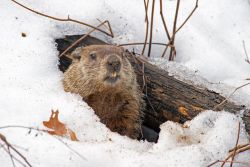
Dedicated in the 1930s as a memorial to President Theodore Roosevelt to honor his profound commitment to conservation, this island was intentionally preserved as natural forest rather than landscaped monument. Located across from Rosslyn, it is one of the rare places in the region where you can walk without destination — only direction. Huntley Meadows Park3701 Lockheed Blvd., Alexandria, VA 22306 Acquired by Fairfax County in the mid-20th century, Huntley Meadows preserves wetlands, forests, and meadows that once formed part of a plantation landscape. Rather than formal gardens, it protects native ecosystems through boardwalk trails and conservation efforts — a lovely place for birdwatchers. Neabsco Creek Boardwalk15125 Blackburn Rd., Woodbridge, VA 22191 Opened in 2019 as part of the Potomac Heritage National Scenic Trail, the Neabsco Creek Boardwalk winds for nearly a mile through protected wetlands, allowing visitors to experience Virginia’s tidal marsh ecosystems up close. Oatlands Historic House & Gardens20850 Oatlands Plantation Ln., Leesburg, VA 20175 Established in the early 19th century as a plantation estate, Oatlands later evolved into a formal garden property influenced by European design traditions. Its terraced gardens, boxwood parterres, and sweeping lawns reflect refined 20th-century stewardship and are now run by the National Trust for Historic Preservation. Spring does not arrive all at once. It begins quietly. Shadow or not, the season is turning. And these gardens are waiting. The Groundhog’s PredictionSince we relied on the groundhog, here is a little history behind the tradition.
If the animal sees its shadow, winter continues. If it does not, spring is on its way. This year, the verdict was clear: six more weeks of winter, which this year coincides (almost) to the March 20th spring equinox. The tradition comes from Pennsylvania Dutch communities in the 19th century, themselves inspired by older European weather folklore linked to Candlemas - la Chandeleur - the February 2nd feast long associated in Europe with weather prediction. For centuries, farmers believed that a bright, sunny Candlemas meant winter would be long, while a cloudy day signaled an earlier spring. In parts of Germany, this belief became linked to a hedgehog said to “read” the sky through its shadow. When German settlers arrived in Pennsylvania, they replaced the hedgehog with a groundhog. In France, we say: "À la Chandeleur, l’hiver meurt ou prend vigueur." Keep warm the Alsatian WayThe 2026 Alsace DC Welcome Pot-au-Feu Dinner should keep you warm until the end of winter! Connect with new and returning friends of Alsace who share an interest in its culture and heritage. Open to all aged 18+ and free for 2025 Alsace DC members, this opening dinner will allow us to get to know each other better—both old and new members—discover the association and our events, as well as opportunities to get involved. Bring a friend who wants to discover the association! Check out the menu and register:
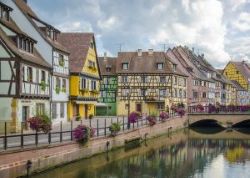
Alsace Washington D.C. AssociationAlsace is a land of passage, yet it has successfully integrated newcomers into a cohesive entity characterized by a strong identity based on shared values. Its geography is defined by the Rhine, a vital economic artery; a fertile plain that attracts neighboring populations; vineyards, a source of wealth and a distinctive culture; and finally, the Vosges Mountains.
The region, now part of the "Grand Est" region, is characterized by a strong cultural identity, traditions reflected in its dialect, and a rich gastronomy. The Alsatian community in Washington, D.C. follows these goals:
 Les Expressions FrançaisesFaire l’école buissonière
The expression has been used in the historical context of the French Wars of Religion about informal Protestant schools held outside official Catholic institutions, so much so that in 1554 the Parlement de Paris issued an edict condemning this unauthorized teaching later referred to as “écoles buissonnières” occurring outside official catholic institutions. So, faites l’école buissonière as soon as possible...you might even spot a groundhog among the bushes! |
||||||||||||||
SPONSORS |
||||||||||||||
|
||||||||||||||
AGENDA |
||||||||||||||
|
||||||||||||||
|
||||||||||||||




 Washington’s Secret Gardens
















This email was sent to: [email protected]